

Table of Contents
Big brands have deep budgets, large teams, and thousands of backlinks. So can a freelancer or a small business really compete in search? Yes, but not by copying the giants. AI-driven SEO helps you find the gaps they ignore and fill those gaps faster than they can.
A quick note on transparency. I haven’t yet documented a verified client case study from this exact approach. What follows is the framework I recommend for freelance SEO, built on how search works and the tools I use. Treat it as a practical plan, not a guarantee.
What Is AI-Driven SEO and Why Does It Level the Playing Field?
AI-driven SEO means using AI tools to speed up the slow parts of optimization: keyword research, search intent analysis, content gap checks, and keyword grouping. You still make the decisions. AI just helps you make them faster and cheaper.
That matters because enterprise sites and small sites win in different ways.
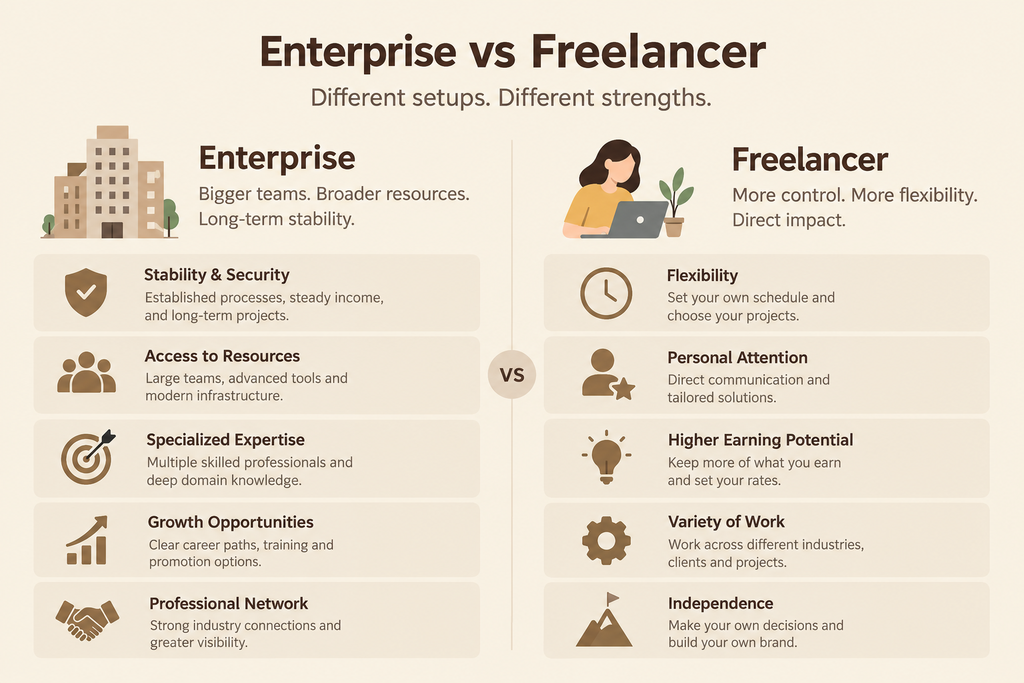
| Factor | Enterprise competitor | Freelancer or small business |
|---|---|---|
| Budget | Large | Limited |
| Backlink profile | Strong, built over years | Smaller, needs focus |
| Speed | Slow approvals | Fast decisions |
| Keyword focus | Broad, high-volume terms | Specific, niche searches |
| Local knowledge | Often generic | Deep and personal |
You can’t beat them on budget. You can beat them on focus, speed, and relevance. That is the core of how to outrank enterprise competitors without a big spend.
Why Enterprise Competitors Are Easier to Beat Than You Think
Large sites often publish broad pages that try to please everyone. That leaves room for specific answers.
Take a digital marketing business in Kochi. It will struggle to rank for “digital marketing agency” against established agencies with strong backlink profiles. But “SEO services for dental clinics in Kochi” is a narrower search with clearer intent. A focused page can answer it better than a generic service page can.
This is the idea behind SEO on a budget: stop fighting for every keyword and pick the fights you can win.
7 Steps to Outrank Enterprise Competitors on a Freelance Budget
1. Start With the Customer, Not the Keyword
Before you open any tool, learn the business. Who are the customers? What problems are they trying to solve? What words do they use? Keywords are just customer problems written as search queries.
2. Find Real Long-Tail Queries for Free
You don’t need an expensive suite to start. Use these:
- Google Autocomplete to see how people phrase searches
- People Also Ask for question-based keywords
- Google Search Console for queries your site already gets impressions for
- Google Keyword Planner for volume ranges
- Ahrefs Free Keyword Generator for extra ideas
3. Use AI SEO Tools for Intent and Gap Analysis
Now bring in AI SEO tools. Paste your keyword list into ChatGPT and ask it to group the terms by intent: informational, commercial, or transactional. Then ask what questions the top-ranking pages leave unanswered. Those unanswered questions are your content gaps.
One warning: AI can invent details. Check every claim before it goes on your page.
4. Pick Winnable Keywords
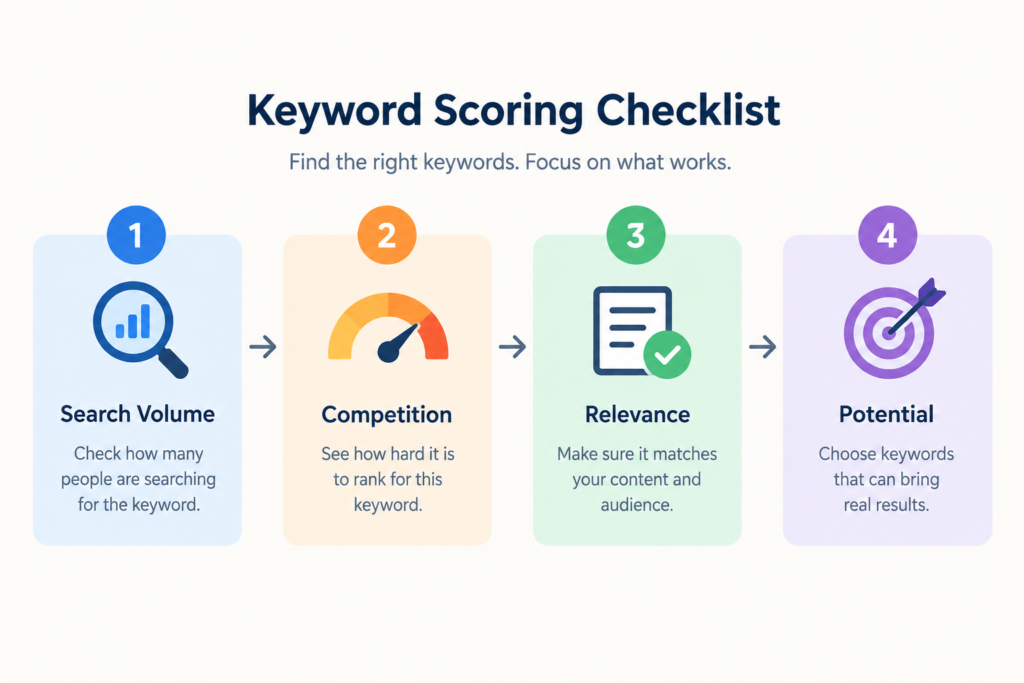
Score each keyword on four things:
- Search intent: Does it match what you offer?
- Search volume: Is anyone actually searching?
- Competition: Can a smaller site realistically rank?
- Relevance: Would this visitor become a qualified lead?
Choose specific phrases with clear intent over high-volume terms. A keyword with 50 monthly searches and strong buyer intent can be worth more than one with 5,000 vague searches.
5. Build Topic Clusters and Fix One Page First
Group related keywords into clusters. Then pick one important service page and improve it. Add three to five long-tail keywords, answer real customer questions, and tighten the title, headings, and internal links. Starting small keeps the work manageable for any freelance SEO schedule.
6. Earn Relevant Backlinks, Not Just More Backlinks
Enterprise sites have more links. Don’t try to match them link for link. Instead:
- Check competitor backlink profiles with free checkers to spot realistic opportunities
- Write guest posts for relevant industry blogs
- Partner with local businesses and organizations
- Publish link-worthy resources, such as original guides and checklists
- Keep your business details consistent across local directories
AI-driven SEO tools can help you research outreach targets and organize opportunities. The links themselves must be earned naturally. Relevance beats volume every time.
7. Measure What Matters
Track progress in Google Search Console: impressions, clicks, keyword positions, and qualified leads. Rankings alone don’t pay the bills. Leads do. Review the data monthly and update the pages that show promise.
The Biggest Mistake: Chasing Broad Keywords
Small businesses often target broad, popular terms without considering their budget, authority, or audience. They spend months on pages that never reach page one.
Long-tail keywords fix that problem. They match what customers actually type, and they give a smaller site a fair fight.
Where AI Still Needs a Human
AI is a strong assistant, but it has limits. It can’t fully understand a business’s unique experience, customer relationships, or local market. It can also produce inaccurate or generic content.
Keep humans in charge of these tasks:
- Fact-checking every statistic and claim
- Understanding customers and local nuances
- Developing an authentic brand voice
- Making strategic decisions
This matters for rankings too. Google says it rewards helpful, people-first content, and original experience is hard for AI to fake.
Your Action Plan for This Week
- Pick one important service or product page.
- Choose three to five relevant long-tail keywords.
- Study the current search results for each one.
- Rewrite the page to answer real customer questions.
- Track impressions and clicks in Google Search Console.
You don’t need pricey tools to begin. Free ones are enough.
FAQs
What is AI-driven SEO?
AI-driven SEO is the use of AI tools to speed up keyword research, intent analysis, content gap checks, and reporting. Humans still review the output and make the final decisions.
Can a small website really outrank enterprise competitors?
Yes, for specific, targeted searches. You are unlikely to win broad, high-volume keywords. Results vary by niche, competition, and how consistently you work.
What are the best free AI SEO tools?
Good starting points are Google Search Console, Google Keyword Planner, Ahrefs Free Keyword Generator, and ChatGPT. Free limits and features change, so check each tool’s current plan.
How long does SEO on a budget take to work?
There is no fixed timeline. Many sites need several months to see steady gains, and the pace depends on competition, content quality, and links.
Conclusion
AI-driven SEO won’t hand a freelancer an enterprise budget. It will help you outrank enterprise competitors for the specific searches that matter to your customers. Pick focused keywords, improve one page at a time, earn relevant links, and measure leads, not just rankings.
Start with one page this week. Small, consistent steps are how smaller sites beat bigger brands.
Looking for the best digital marketing freelancer in Kochi to grow your business online? I help businesses build a strong digital presence through customized digital marketing strategies, including SEO, social media marketing, content marketing, Google Ads, and website optimization. My approach focuses on understanding your business, target audience, and goals to create practical strategies that improve online visibility, attract the right audience, and generate meaningful results.